What the Wheel of the Year is
The Wheel of the Year is the yearly cycle of eight festivals kept by modern Pagans, Wiccans and many witches. The festivals are called sabbats. Four of them mark the turning points of the Sun, the two solstices and the two equinoxes. The other four fall roughly halfway between these and come from old Gaelic seasonal festivals.
The festivals differ in age. Samhain, Imbolc, Beltane and Lughnasadh appear in medieval Irish writings. The eight-part wheel that joins them to the solstices and equinoxes is a twentieth-century arrangement. It took shape in Britain in the middle of the century, and the Wiccan coven of Gerald Gardner and the Order of Bards, Ovates and Druids led by Ross Nichols are the groups most often named in its history. The names Litha, Ostara and Mabon became common in the 1970s.
Practitioners treat the wheel as a living framework and adapt it to their own climate and tradition. This page gives the dates and the traditional themes, and you can use as much of them as suits your practice.
Solstices, equinoxes and cross-quarter days
The four quarter days are astronomical. At a solstice the Sun reaches its highest or lowest midday point in the sky, and at an equinox day and night are close to equal. Each is a single instant, which is why this page shows a time as well as a date, and why the date can move by a day from one year to the next or from one time zone to another.
The four cross-quarter days are Samhain, Imbolc, Beltane and Lughnasadh. They are traditionally kept on fixed calendar dates, which in the north are 31 October, 1 February, 1 May and 1 August. The old festivals began at sunset on the evening before, and some traditions count 1 November for Samhain. The Sun reaches the true midpoint between a solstice and an equinox between two and eight days later than these dates. Some practitioners keep that moment instead, so the table shows it under each cross-quarter date.
The wheel in the north and the south
A sabbat takes its name from its season. Yule is the winter solstice and Litha the summer solstice wherever you live. In the Northern Hemisphere Yule falls around 21 December, and in the Southern Hemisphere around 21 June. Many southern practitioners move all eight festivals by half a year, so Samhain comes at the start of May and Beltane at the start of November.
The wheel on this page keeps the same layout in both hemispheres. The summer solstice stands at the top and the winter solstice at the bottom, and the dates change with the switch. Some practitioners in the south keep the northern calendar for the sake of tradition, and the switch shows that calendar too.
How to use this page
- Choose your hemisphere. The page starts with the one that matches the time zone of your device. The switch changes the wheel, the table and the cards together.
- Pick a year. Use the arrows or type a year between 1800 and 2100. The table lists the eight sabbats in the order they fall that year.
- Check the time zone. The page uses the zone of your device. A solstice or an equinox is one moment, so its date can differ by a day between zones.
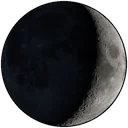
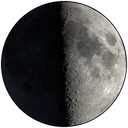
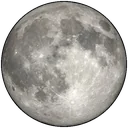
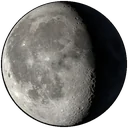
- Read the Moon column. It shows the phase at noon on each date, and the exact time of a new, quarter or full moon when one falls on that day.
- Add the dates to your calendar. The calendar file holds the eight sabbats of the year you chose and opens in Apple Calendar, Google Calendar and Outlook.
For a longer introduction with ideas for each festival, read The Wheel of the Year: 8 Sabbats for Every Hemisphere.
How the dates are worked out
Astronomy Engine, an open-source library by Don Cross, gives the solstices and equinoxes. Each is the moment the Sun reaches a longitude of 0, 90, 180 or 270 degrees along the ecliptic. We compared the sixteen moments from 2026 to 2029 with a table published by the US National Weather Service, and every one agreed within two minutes.
The midpoint of a cross-quarter day is the moment the Sun reaches 45, 135, 225 or 315 degrees. The Moon on each date is its phase at noon in your time zone. Your time zone is read from your device and the calculation runs on this page, so nothing is sent to us.